
March 2026 – Reading time 4 minutes
Insurance markets are often shaped by competition, capital flows and claims experience.
Yet recent developments have reinforced a broader truth, the industry is deeply connected to global geopolitics. When tensions escalate between nations, the impact is not contained to diplomacy or defence. It flows quickly into underwriting decisions, pricing models and ultimately the movement of global trade.
Recent weeks have brought this relationship into sharp focus, particularly across key shipping and energy corridors.
War Risk Cover: A Critical Safety Net
Recent developments across the Middle East have again highlighted the importance of war risk insurance. This specialised cover protects ships, aircraft and energy infrastructure operating in regions exposed to conflict, terrorism or political violence.
Without it, trade in high risk regions would largely come to a standstill. Shipowners, charterers and energy companies rely on this protection to operate with a level of certainty in otherwise unpredictable environments.
Much of this risk is underwritten through the Lloyd’s of London market, where specialist syndicates continuously assess geopolitical developments. These teams adjust premiums, coverage terms and risk appetite in real time, often responding within days as conditions evolve.
The Joint War Committee: Defining Risk in Real Time
Supporting this process is the Joint War Committee, made up of representatives from Lloyd’s and the International Underwriting Association.
The committee plays a critical role in identifying and publishing “Listed Areas”, regions considered high risk due to war and related perils. As tensions escalate, these areas can be expanded, something recently seen across a broader part of the Gulf.
This effectively redraws the map of where heightened risk applies.
Once an area is listed, exposure is reassessed on a voyage by voyage basis. Shipowners must notify insurers before entering, additional premiums are applied, and insurers may reinsure or reduce capacity, tightening the market and increasing the cost of cover.
Pressure Points: The Strait of Hormuz
This dynamic is most visible in the Strait of Hormuz, one of the world’s most important maritime corridors and a route responsible for around 20% of global oil and natural gas flows. As of 24 March 2026, the strait has been effectively shut down, with traffic severely disrupted and most vessels unable or unwilling to transit normally.
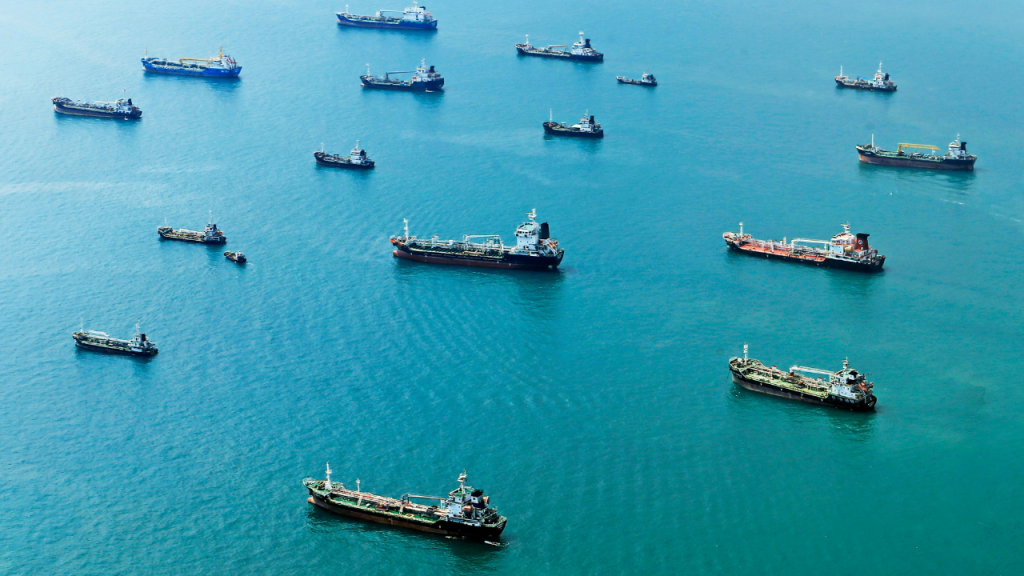
Earlier in the month, an estimated 700+ cargo vessels were effectively stalled across the region, including a significant number of oil tankers. More recent reporting suggests pre-war tanker traffic through the strait has been cut dramatically, while large numbers of seafarers remain stranded across the Gulf.
This disruption has not been driven solely by physical risk, but by the practical reality of insurability.
With the threat of attacks on tankers and further escalation, insurers have withdrawn cover, sharply increased war risk premiums or tightened terms to the point that many operators have chosen not to move.
When Insurance Stops: Trade Slows
This highlights a critical reality. Insurance is not just a financial safeguard, it is an enabler of global trade.
When cover becomes unavailable or prohibitively expensive, ships simply avoid entering affected areas. The result is not just delay, but effective paralysis across a vital trade route. Cargo is held back, routes are adjusted, exports are rerouted where possible and supply chains begin to tighten.
In extreme scenarios, warships may accompany oil tankers through contested waters, reinforcing how closely security, insurance and trade are linked.
Pricing Volatility and Market Response
The financial impact of geopolitical instability can be immediate. War risk premiums may rise sharply within days, reflecting missile threats, drone activity or naval incidents.
The expansion of Joint War Committee listed areas often acts as a trigger for this repricing, as insurers rapidly reassess exposure across fleets and regions. For operators, this creates both cost pressure and operational uncertainty. At the extreme end, insurers may step back entirely if risk becomes too uncertain to price.
The Quiet Role of Insurance in Global Stability
As global instability persists, the insurance industry remains a largely unseen but essential component of international trade. Through markets like Lloyd’s, insurers play a pivotal role in determining how risk is priced and how commerce continues, or fails to continue, through contested regions.
While conflict may dominate headlines, it is often the response of insurers that determines whether trade continues at all.
As these conditions evolve, so too does the need for experienced underwriting and broking capability, particularly across marine, energy and specialty lines, something we continue to see firsthand through our work with clients navigating these shifts.
Related Posts & News
[ux_text text_align="left"] Mental health has always been a taboo subject in many workplaces. Employees may feel uncomfortable discussing their mental Read post
[ux_text text_align="left"] If only you could predict what questions will be asked by the hiring manager before you enter the Read post
[ux_text text_align="left"] The dreaded interview question, “What are your greatest weaknesses?” It’s enough to make even the most confident job Read post